Exposure Triangle For Dummies
It Ain't Got To Be That Hard

If you are a seasoned shooter feel free to skip this one. But, I would also love it if you shared any insights you have in the comments below, we can all be constantly learning from each other.
You’re not dumb, the terminology is.
The exposure triangle is one of the biggest hurdles for anyone getting into photography. It literally is the one thing you HAVE to master to be a decent picture taker. I struggled with it for way longer than I should have. In fact I managed to talk my way into shoots I had no business being on before I figured out the big 3.
The main problem with why I think people struggle with it is the language. Most photographers are f*ckin’ nerds, and so when they try to explain things they use nerd speak. Thus the majority of people teaching photo are the same as computer science majors and academics, they use big words for no reason other than to signal to themselves, and their other nerd friends that they are smart. Smarter than you, which makes them better than you. How do I know they are like that? Cause I’m one of those smug f*cks, working daily to be a reformed member of the aforementioned group. But I’m not doin any of that sh*t here, today, for you I’m a man of the people, and we’re going to make it plain. Cool? Cool.
So here it is in the most simple way I can put it for anyone still struggling. Let me say now, you’re smarter than you think, it’s just people like me that have failed you in the past.
Shutter speed: How do you want it, fast or slow?
The easiest metaphor I can think of (others have used this also) is a set of curtains that you will open and close fast or slow.
The faster they open and close, the more they will freeze motion in the image.
The slower they open and close, more motion blur there will be in the image.
So the longer the “curtains” are open, the more motion your camera is going to capture.

Check out the hand dandy diagram below with very technical language.
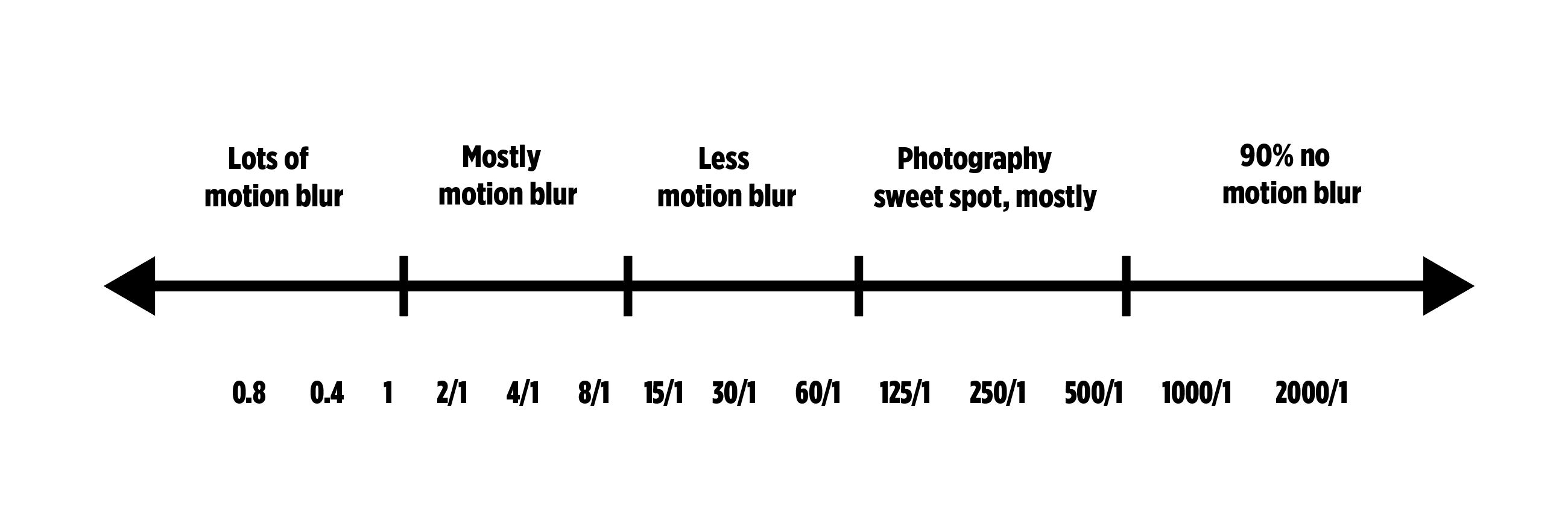
Once you understand this, you can do some pretty fun and awesome stuff with your images.
A simple rule of shutter speed is: Bigger number = Time slows down
Aperture: Focus on what matters.
This is the part where I could talk about how there is a little circle inside of a bigger circle in your camera lens, and how it opens like an asshole to let more light in. But that sh*t doesn’t really matter—pun intended. All you need to know about aperture is its a set of numbers starting low and going higher that tells you how much of the photo is in focus. That’s it. If you want to use fancy photographer terms it’s “depth of field”.
Annnd let’s bring up another one of our handy dandy diagrams with very technical jargon.
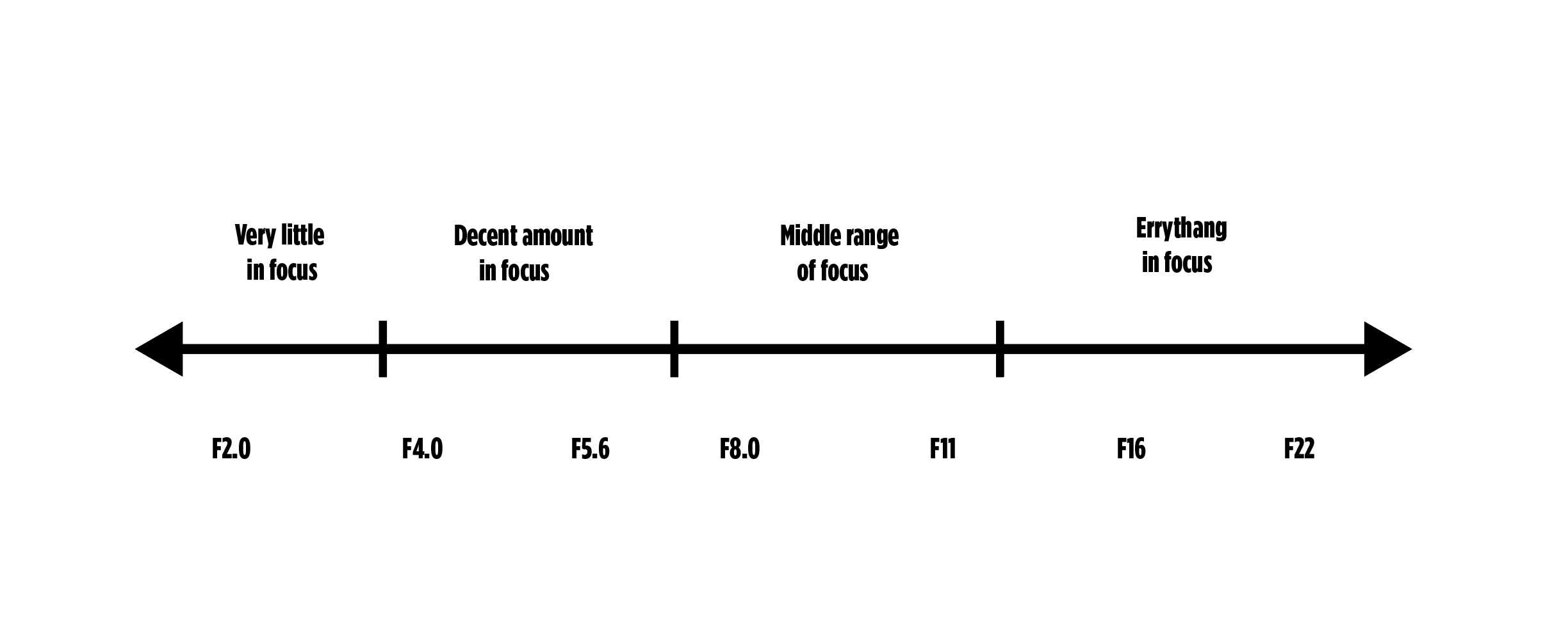

Imagine you are carrying a large cardboard box and you are going to put that box open side down on top of someone. That is your “depth of field”. Its the size of that box and what you can cover it with in front of you. If you have a small number you will have a small box, if your number is big, well you get the picture, literally. You will have a lot in focus with a big number.
A simple rule of aperture is: Bigger number = More in focus
ISO: Sponge Bob & sand paper.
What can our little friend Spongebob tell us about photography and ISO?
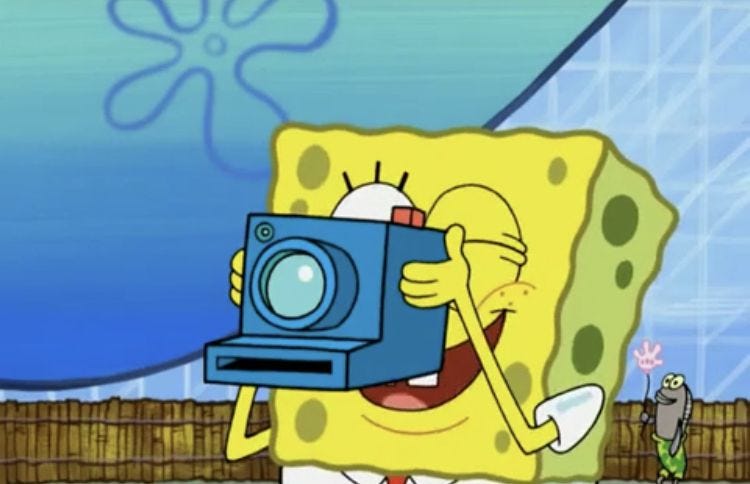
Well, lets think of our cameras sensor as a sponge. It soaks up light instead of liquid. The higher the number of ISO the more light is takes in faster. But there is a cost to taking in more light, and that cost is called “grain”.
So there are two parts here, our sensor and the image it creates. The more light our sponge soaks up quickly the bigger holes the sponge will have. These bigger “holes” result in more grain in our image.
Let’s cue up the last of our handy dandy diagrams.
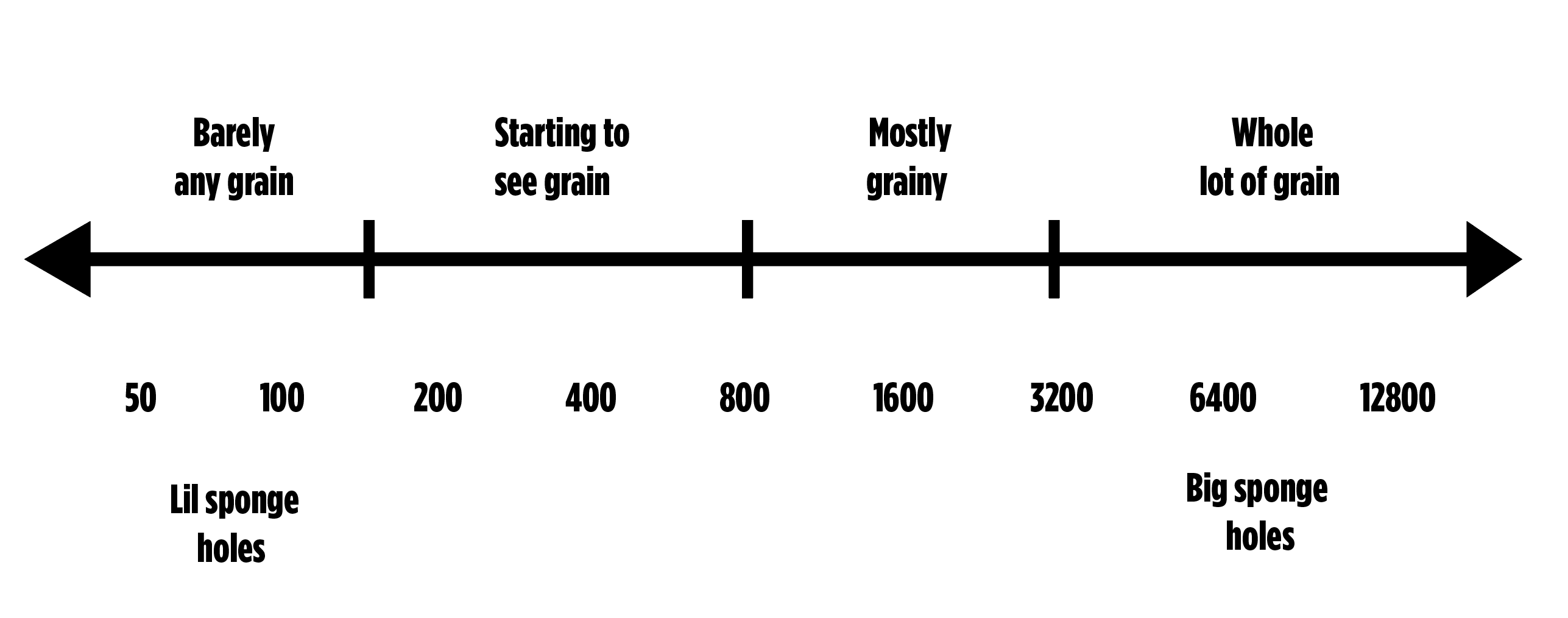

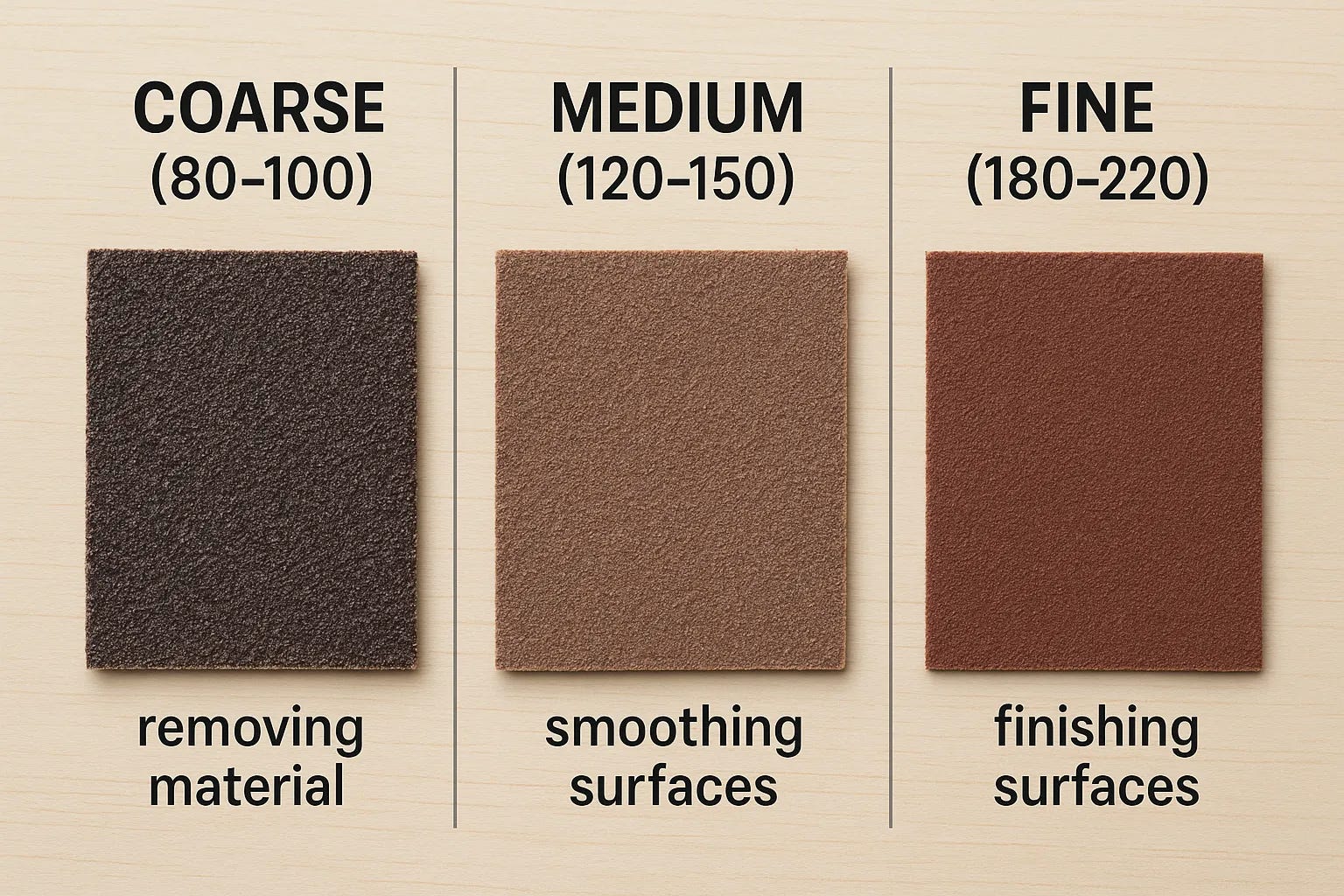

A simple rule of ISO is: Bigger number = More light soaked up + A more grainy image .
Oh yeah! Bring in the Kool Aid man.

The exposure triangle is like making Kool Aid, Lemonade, Rum & Coke, or any other drink you prefer that has 3 ingredients. We’ll stick with Kool Aid. We make the drink recipe to fit our taste of what a we think a well exposed image is. Technically, THERE IS NO PERFECT EXPOSURE. There is only the photographers intent and the image they produce. Style aside, you do want to be mindful that every ingredient effects the ratio of the other ingredients. So if you want other people to enjoy the flavor of your image you might want to have a palatable balanced offering.
We can think about it like:
Sugar = Shutter speed
Kool Aid = Aperture
Water = ISO
When we change the ratio of one as I mentioned before it will effect the other two. The goal is to create a balance. That balance is called the exposure of the image. Again, I can’t give you the perfect formula for each situation because all situations are unique. You will have to do the work and figure those things out yourself. The cheat here is damn near very camera now has a build exposure meter to tell if you are close.
Again the situation and story dictates the way you will choose to use each of the three to create the image you want. Photography is technical but more so personal.
See you outside.
I hope that this brief foray into the big 3 helps you as you’re figuring things out on your photography journey. I tried to keep this the simplest I could and still have it make sense. Now go out and get to shootin’. You got this!
If you have any questions, feedback, or comments I would love to hear them, and help clear anything up.
Until the next one. I hella appreciate all of you.
-Scott
If you are interested in other pieces I’ve written about improving your photography you can check out these posts.
The Three Perspectives Of An Image
3 Reasons Why Your Photos Are Trash
The 2 Reasons Why Your Lighting Is Trash
4 lessons I learned while photographing Snoop Dogg
Another one down! If you’re interested in my work you can find more in the links below.
If you’re not already, please considering subscribing. My goal is to get two of these out a week. See you on the next one.
“how it opens like an asshole” - most of the time I’m f/22 but after Chipotle I’m 0.95 😂😂😂😂
Thank you, I’ve read this multiple times thinking i understand it and nope like everything else that is part of learning it needs constant reinforcement (i am clearly a newbie)